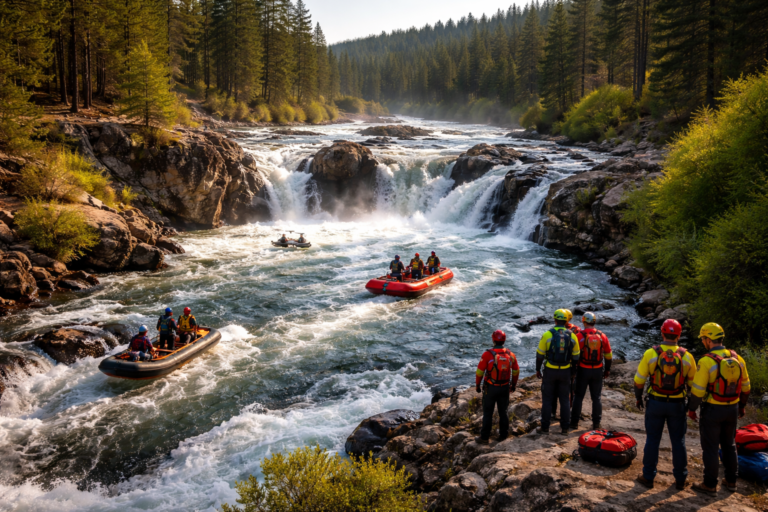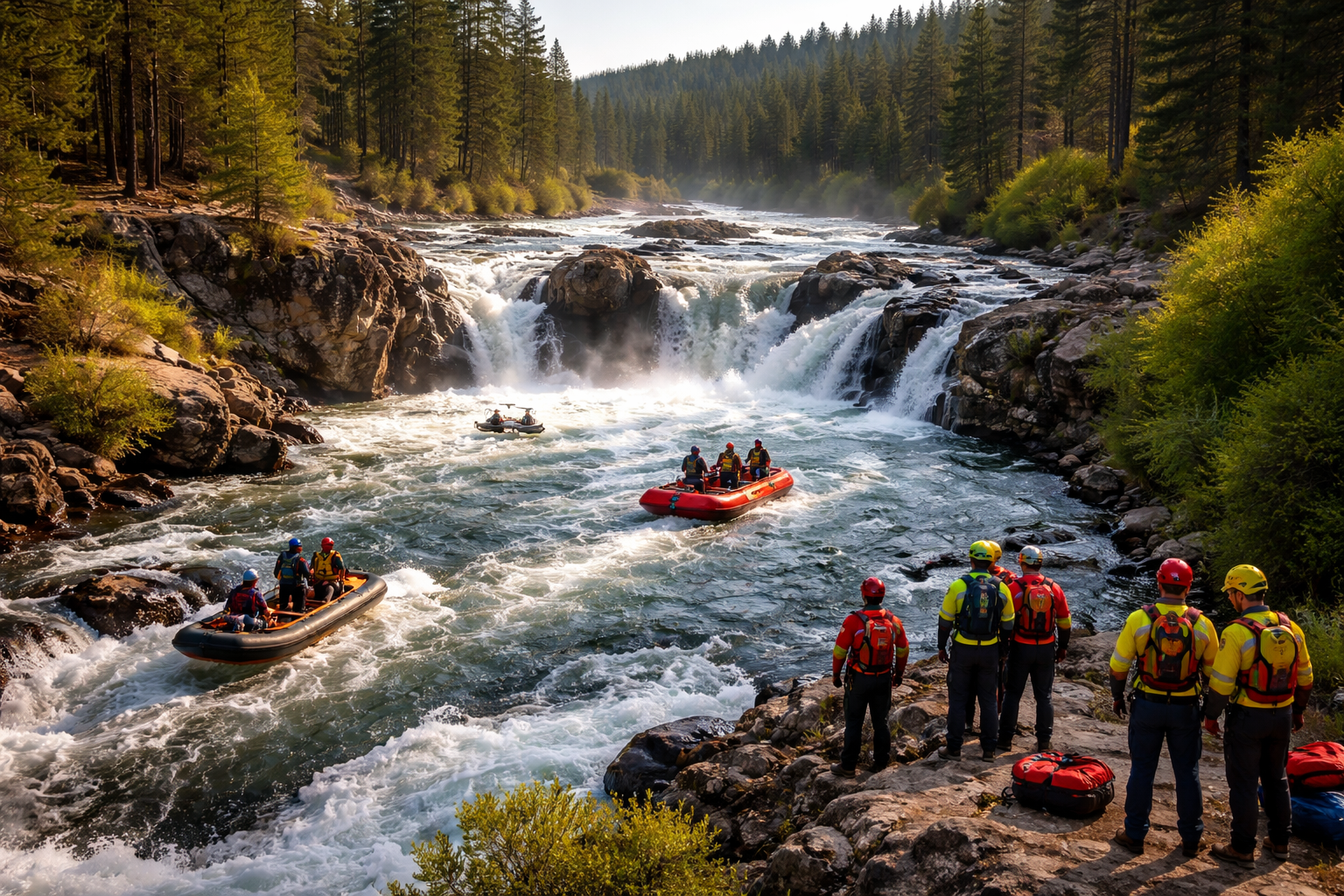
The Dillon Falls rescue efforts became a major emergency operation after a serious accident on the Deschutes River in Oregon. Dillon Falls is known for its fast-moving water and strong rapids, making it one of the most dangerous spots on the river.
When a group of people accidentally went over the falls, rescue teams quickly started a large search and recovery mission. This incident shows how dangerous rivers can be and why safety rules are very important.
In this article, you will learn about the Dillon Falls accident, the rescue timeline, the search methods used, and important river safety tips.
About Dillon Falls and the Deschutes River

Dillon Falls is located on the Deschutes River near Bend, Oregon. It is part of the Deschutes National Forest and is a popular place for visitors.
Many people come here for:
- Hiking
- Sightseeing
- Kayaking
- Photography
However, the river becomes very dangerous near the falls.
Quick Facts About Dillon Falls
| Feature | Details |
|---|---|
| Location | Near Bend, Oregon |
| River | Deschutes River |
| Rapids level | Class 5 (extreme) |
| Risk level | Very high |
| Safe for beginners | No |
The water moves quickly and becomes very powerful before reaching the falls, making it hard to escape once you are too close.
The Dillon Falls Accident Explained
The accident happened when a group of six people floating on the river failed to exit at the safe point.
Because they missed the exit, the strong current carried them toward Dillon Falls.
Incident Details
| Detail | Information |
|---|---|
| Total people | 6 |
| Rescued | 3 |
| Initial death | 1 |
| Missing | 2 |
| Location | Dillon Falls |
Emergency services were called immediately, and rescue teams rushed to the scene.
How the Rescue Operation Started
As soon as the accident was reported, authorities began a search and rescue operation.
Rescue teams worked quickly to find survivors and help those in danger.
Rescue Teams Involved
- Sheriff search and rescue teams
- Swiftwater rescue experts
- Marine patrol units
- Emergency responders
- Volunteer teams
These teams searched both the river and nearby land areas.
Tools and Equipment Used in the Search
The Dillon Falls rescue efforts used many tools to make the search safer and more effective.
Main Search Tools
| Tool | Use |
|---|---|
| Drones | Check river from above |
| Boats | Search downstream |
| K9 dogs | Help find missing people |
| Rescue teams | Work in fast water |
| Ground teams | Search riverbanks |
Drones were very helpful because they could reach places that were too dangerous for people.
Rescue Effort Becomes Recovery Mission
At first, rescue teams hoped to find survivors. But the strong water and dangerous conditions made survival unlikely.
Because of this, the mission changed into a recovery operation.
Rescue vs Recovery
| Type | Meaning |
|---|---|
| Rescue | Save lives |
| Recovery | Find victims |
This change meant teams had to carefully search the river and nearby areas over a longer time.
Second Victim Recovered
After a few days, search teams found a second victim in the river.
This confirmed the seriousness of the accident.
Updated Situation
| Status | Number |
|---|---|
| Survivors | 3 |
| Deaths | 2 |
| Missing | 1 |
Rescue teams continued working to find the last missing person.
Ongoing Search for the Final Victim
Finding the last missing person was very difficult. The river has strong currents, large rocks, and deep areas.
Methods Used in the Search
- Large drones for detailed scanning
- Special search dogs
- Underwater search teams
- Checking areas further downstream
Officials also reduced water flow for a short time to help with the search.
Problems Faced by Rescue Teams
| Problem | Reason |
|---|---|
| Strong current | Hard to enter water |
| Rocky river | People can get trapped |
| Fast flow | Victims move far away |
| Remote area | Hard to access |
These problems made the search slow and challenging.
Why Dillon Falls Is Dangerous
Dillon Falls is one of the most dangerous parts of the Deschutes River.
Main Dangers
- Very strong rapids (Class 5)
- Narrow river that increases water speed
- Large rocks under the water
- Few safe exit points
Rapids Levels Explained
| Class | Difficulty |
|---|---|
| 1 | Easy |
| 2 | Moderate |
| 3 | Hard |
| 4 | Very hard |
| 5 | Extreme |
Dillon Falls is a Class 5 rapid, which is the highest danger level.
Safety Tips for River Visitors
This accident shows why safety is very important when visiting rivers.
Important Safety Rules
- Always know where to exit the river
- Do not enter dangerous areas
- Wear a life jacket
- Avoid using tubes in fast water
- Follow warning signs
Safety Checklist
| Item | Purpose |
|---|---|
| Life jacket | Keeps you safe in water |
| Map | Shows safe exit points |
| Phone | Call for help |
| Helmet | Protects your head |
| Whistle | Ask for help |
Following these simple rules can help prevent accidents.
Conclusion
The Dillon Falls rescue efforts showed how quickly emergency teams respond to serious accidents. Many teams worked together using boats, drones, and trained search dogs to search the river.
Even though the rescue operation was difficult, the teams did their best in very dangerous conditions.
This tragic event reminds us that rivers can be beautiful but also very risky. By understanding the dangers and following safety rules, people can enjoy nature more safely.
About the Author